
Plastic surgery SEO is the process of making a surgeon’s website more visible when prospective patients search for procedures, providers, recovery information, prices, or local consultations. It combines procedure-focused content, local search optimization, technical SEO, authority building, and conversion tracking so qualified searches lead to calls, forms, and booked consultations—not just more website traffic.
When a cosmetic clinic wants a full calendar, it doesn’t need magic—it needs a system. In Miami we see it every day: when SEO runs properly, organic drives up to 94% of sales; when it stops, traffic deflates toward 10,000 visits a month and, within about 90 days, rankings fade as if someone dimmed the lights. The bright side is that those lights come back on with a clear, repeatable framework: E-E-A-T content, real authority, and strategic keyword positioning—measured end to end in GA4 and GSC and tied to a CRM like GoHighLevel so every click has a clean path to a booked consult.
Plastic surgery SEO isn’t “sprinkle in some keywords” or hoard random backlinks. It’s a clinical process where every page plays a specific role. When someone searches rhinoplasty miami or breast augmentation near me, they’re not looking for poetry; they want proof of experience, before-and-after photos, realistic expectations, and a frictionless way to book. That’s why we blend medical clarity with patient-friendly language, visible credentials, credible social proof, and design choices that remove effort. A dash of human humor doesn’t hurt either—tell someone they won’t be back at the gym tomorrow and watch bounce rates fall while trust rises.
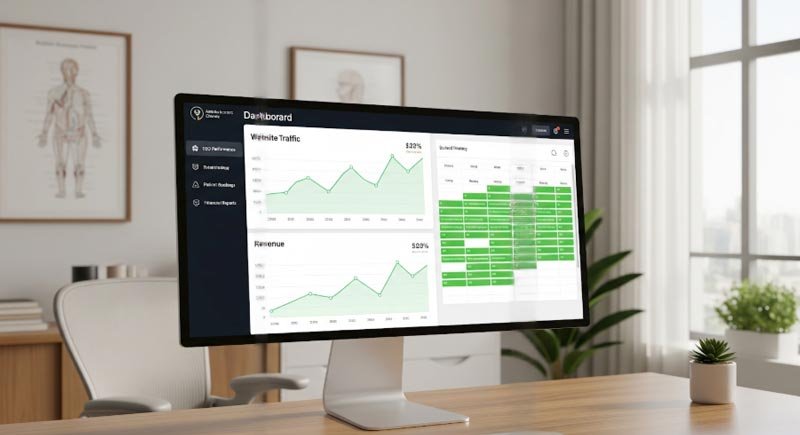
My stack is deliberate. GTM orchestrates events, GA4 handles attribution, GSC surfaces intent, Semrush and Screaming Frog diagnose opportunities, PageSpeed guards Core Web Vitals, and GoHighLevel acts as the operations hub. With that loop in place, the clinic stops “believing” in SEO and starts seeing it—in calendars, not just dashboards.
There’s a line we use internally that captures the playbook better than any slide deck: “Growth Marketing Studio developed a multifaceted strategy centered on three fundamental pillars to build a dominant and sustainable organic presence:
1. Strategic Link-Building Acceleration.
2. Quality Content Enhancement (E-E-A-T)
3. Strategic Keyword Positioning.” It isn’t just pretty; it’s actionable.
Procedure pages are the heart of the site. Each one reads like a thorough consultation—what it is, who’s a candidate, expected results, recovery timelines, risks and trade-offs, and a visual before & after gallery that does half the talking. The voice is not ad-speak; it’s a clinician explaining clearly and empathetically. The FAQs come from real calls and WhatsApp threads, then we end with the right call-to-action for that moment in the journey. What looks like “just content” is actually a clinical script tuned for search and conversion. In my experience, adding a short “Your First Week, Day by Day” section consistently extends dwell time and lifts CTR from the SERP—people love knowing exactly what to expect.
Authority isn’t a number in a tool; it’s verifiable reputation. We earn mentions in medical and local directories with clean NAP consistency, secure PR coverage with real stories (no sensitive data, obviously), collect links from vendors, scientific associations, and universities, and collaborate with complementary practices. Once the clinic has a strong case to tell, we accelerate authority with controlled campaigns that prioritize quality, topical relevance, and geographic proximity. That push shortens time-to-rank from months to weeks—and in some markets, to days. Waiting for links to appear organically is not a strategy; it’s wishful thinking.
We work three layers of intent: head terms like plastic surgery miami, “procedure + city” combos like rhinoplasty miami, and long-tails that reveal decisions in progress such as best implant size after kids. Each intent maps to a page type and plugs into a themed internal-linking structure. GoHighLevel keeps our topic map alive so we can prioritize clusters that actually convert. If a keyword brings visits but not contracts, that’s not a win—it’s an expensive distraction.
Plastic surgery SEO works best when every priority procedure has a clear page designed around one primary patient need. A rhinoplasty page should not compete with a general facial surgery page for the same search. It needs its own URL, title, H1, candidate information, expected outcomes, recovery guidance, risks, before-and-after assets, surgeon credentials, location signals, FAQs, and consultation path. We start with the procedures that combine business value, patient demand, clinical relevance, and a realistic opportunity to compete. That keeps the strategy tied to the operating room instead of a publishing calendar. The goal is not to create hundreds of thin pages for every keyword variation. It is to build one authoritative destination for each meaningful procedure and make it more useful than the pages already ranking. When one page has a precise role, Google can interpret it more easily and patients can decide what to do next without searching the rest of the site.
The main procedure page should sit at the center of a supporting content cluster. For rhinoplasty, that cluster might address recovery by week, open versus closed techniques, candidacy, realistic result timelines, revision surgery, consultation questions, costs, and location-specific concerns. Each supporting article should answer a distinct question and link naturally back to the procedure page, while the procedure page links to the resources patients commonly need before booking. This creates a logical path from early research to commercial intent without forcing every query onto one oversized page. In our process, we also connect relevant gallery entries, surgeon bios, financing information, location pages, and patient resources. Internal linking should describe what the destination contains; vague anchors such as “learn more” waste context. The result is a topic structure that helps search engines understand depth while giving patients enough information to move forward with confidence.
“Plastic surgery” and “cosmetic surgery” may overlap in everyday searches, but patients do not always use them in the same way. Some search for a “plastic surgeon” when evaluating credentials or looking for a specific physician. Others use “cosmetic surgery” when focused on an elective appearance-related goal. Our cosmetic surgery SEO guide shows how to capture that elective, cash-pay demand. Procedure names can vary even more: a patient may type “nose job,” “eyelid lift,” “belly fat surgery,” or “post-pregnancy body surgery” before learning terms such as rhinoplasty, blepharoplasty, liposuction, or mommy makeover. An effective content strategy records those phrases without letting informal wording control the medical explanation. Use searcher language in titles, introductions, FAQs, image captions, and supporting articles when it genuinely reflects the question. Then introduce the accurate clinical term immediately. This approach increases relevance while helping the reader become more informed rather than simply repeating a keyword.
The best procedure content sounds like a clear consultation, not a medical journal or an advertisement. We have found that pages become easier to understand when they acknowledge the phrase a patient already knows and then explain the medically accurate concept, limitations, candidacy, recovery, and trade-offs. A page can naturally say that patients often call rhinoplasty a “nose job,” but it should not reduce the procedure to a cosmetic slogan. The same principle applies to terms such as “tummy tuck,” “mommy makeover,” “double-chin removal,” and “facial rejuvenation.” Search vocabulary should open the conversation; clinical accuracy should guide it. This also prevents separate pages from being created for synonyms that have the same intent. Before publishing a new URL, determine whether the term represents a genuinely different procedure, audience, location, or decision stage. When the intent is the same, strengthen the existing page instead of creating another page that competes with it.
"Our strategy adheres strictly to the Google Search Quality Rater Guidelines, specifically the concepts of Experience and Trustworthiness required for YMYL (Your Money or Your Life) topics."
The Map Pack is a shortcut to the consult. A well-maintained GBP multiplies opportunities when categories are correct, NAP matches the website and citations, photos are professional and refreshed monthly, posts are useful, and the Q&A section answers practical questions without fluff. Replacing cold descriptions with warm, specific microcopy, recovery timelines, what a “typical case” looks like, realistic expectations, boosts interactions. Reviews aren’t begged for; they’re guided, so patients describe the experience future patients want to read about. One more detail that matters: the landing page linked from the listing must match the searcher’s intent. That’s the difference between a curious click and a booked appointment.
Citations matter when they’re tidy. Same address format, same phone, same brand. Avoid suspicious review spikes or templated wording. A steady flow of detailed, human reviews builds confidence for people and algorithms alike. Thoughtful, timely responses—especially to the occasional negative review—reinforce authority rather than eroding it.

Technical SEO is just user experience in work boots. A site that loads quickly, stays stable while scrolling, works flawlessly on mobile, and treats privacy seriously communicates professionalism before a single headline is read. We aim for an LCP under 2.5s, a steady CLS, snappy interaction, modern image formats like WebP or AVIF, and smart lazy loading. Structured data speaks search engines’ language: LocalBusiness or Physician for the practice, FAQPage for common questions, ImageObject for before-and-after galleries, and VideoObject when applicable. Pair that with clean HTTPS, transparent consent, and HIPAA-friendly forms, and the content gets the stage it deserves.
Site architecture should feel like good hospital signage. We group procedures by families—nose, breast, body contouring, face—with clear breadcrumbs and sane hierarchies. Navigation highlights what keeps the business healthy, and city or neighborhood pages handle hyper-local intent. Internal links are intentional: educational posts lead to procedures, FAQs remove friction, and the next step is always obvious.

Traffic doesn’t pay salaries. Conversion does. A before-and-after gallery sortable by case type, age, or goal converts better than a paragraph of adjectives. Testimonials with names and cities, credible media features, accreditations, and staff photos open doors that copy alone can’t. Forms work when they ask only what’s necessary—and when someone follows up fast. Automation in GoHighLevel helps, but the real lift comes from human speed. Responding in minutes, not hours, reliably pushes show-up rates above 20% without raising ad spend.
We measure what matters. GSC reveals intent by procedure and near-me queries. GA4 tracks conversions by page, channel, and city. GoHighLevel or your EMR completes the funnel to revenue. When a clinic sees a panel that says “this rhinoplasty cluster generated $X this quarter,” the debate about whether SEO “works” vanishes. The only discussion left is how to scale what’s working.
Most declines come from inertia. If publishing slows, authority starves, and the GBP goes stale, both the algorithm and the audience notice. A healthy cadence of content, a couple of high-quality PR/link bursts each month, quarterly refreshes for money pages with new photos and FAQs, and serious visibility monitoring prevent the slump. If organic traffic falls more than 10%, we react that week. Markets don’t wait.
From 2021 to 2025 we ran this system without shortcuts. Tracking only the $250 deposit per reservation—the minimum guaranteed at booking—the numbers climbed year after year. In 2021 we recorded 2,352 contracts totaling $590,183.32. In 2022 that rose to 2,934 contracts and $736,253.69. In 2023 we reached 3,858 contracts and $968,173.60. In 2024 we closed 5,334 contracts for $1,338,500.00. In 2025 we scaled to 7,772 contracts totaling $1,943,000.00, a 45% jump over 2024. Across the period, that’s 22,250 contracts and $5.58M in deposits. The CAGR sits around 35% annually. Remember, these figures reflect only deposits. The full procedure revenue is several times higher.
The pattern is remarkably consistent. Authority grew through sector and local media, clean medical directories, and partnerships with vendors and associations. Content matured with high-quality before-and-after assets, useful copy, realistic expectations, and a tone that balances rigor with warmth. The Google Business Profile stayed lively with new photos, weekly posts, and a Q&A section where patients found answers before calling. Conversion improved thanks to concise forms, visible WhatsApp contact, and a response SLA that rarely exceeded five minutes. When those elements run together, growth stops being linear and starts compounding.
Plastic surgery SEO pricing depends on the market, number of locations, website condition, procedure priorities, content requirements, authority gap, and measurement setup. The current Growth Marketing Studios guide places many programs in competitive markets between $1,200 and $3,500 per month, depending on scope and ambition. That figure should be treated as a planning range rather than a universal price. A clinic with one location and six established procedure pages requires a different program from a multi-location practice rebuilding its website, galleries, tracking, local presence, and entire content architecture. The proposal should explain what will be delivered during the first 90 days and what continues every month. We would rather narrow the initial campaign to the procedures that can influence consultations than spread the budget across dozens of low-impact tasks. A cheaper retainer is not economical when it generates reports but leaves the clinic without improved pages, qualified leads, or reliable attribution.
A serious monthly scope should cover strategic planning, keyword and competitor analysis, procedure-page creation or improvement, technical fixes, internal linking, local SEO, Google Business Profile work, authority development, reporting, and conversion optimization. It should also define who supplies medical review, images, before-and-after permissions, development resources, and responses to patient inquiries. Ask whether the clinic owns the content, accounts, tracking configuration, citations, and creative assets if the relationship ends. Reporting should follow the journey from search query to landing page, meaningful event, qualified lead, consultation, deposit, and completed procedure whenever the clinic’s systems allow it. Rankings and traffic remain useful diagnostic signals, but they are not the final business outcome. Our standard is simple: if a keyword attracts visits but never contributes to a qualified patient action, it should not receive the same priority as a smaller cluster that consistently creates consultations.
A plastic surgery practice can publish useful procedure content without placing patient information into public pages, URLs, analytics dimensions, image filenames, testimonials, or marketing reports. Start by separating educational website content from authenticated portals, appointment systems, intake tools, and other workflows that may handle individually identifiable health information. Do not assume that every anonymous visit to a health-related page automatically constitutes PHI; applicability depends on whether the organization is regulated by HIPAA, what information is collected, whether it identifies an individual, and the context in which it is maintained or disclosed. HHS currently notes that a federal court vacated part of its tracking-technology guidance concerning the combination of an IP address and a visit to an unauthenticated health-related webpage. That nuance makes a documented data-flow review more important, not less. Compliance decisions should be reviewed with qualified legal or privacy professionals.
Treat privacy as part of the SEO stack. Inventory contact forms, appointment requests, chat tools, call tracking, session replay, analytics tags, advertising pixels, CRM integrations, email systems, gallery workflows, hosting, and any vendor receiving website data. Record what each tool collects, where it sends the information, how long it is retained, who can access it, and whether a business associate agreement is required when a vendor performs functions involving PHI. Avoid sending names, procedure interests, appointment details, medical notes, phone numbers, email addresses, or other sensitive values through page URLs, custom analytics parameters, tag-manager variables, or advertising audiences. Use the minimum data needed for measurement and restrict access by role. Before-and-after photographs and testimonials need their own documented authorization and publishing workflow. In our work, the safest measurement plan is also the cleanest one: track aggregate page and conversion performance while keeping patient-level clinical information inside approved systems.
The plastic surgery SEO that wins markets doesn’t rely on tricks; it relies on consistency. Content that proves experience, authority others are happy to cite, and positioning that connects intent to business goals. Keep the cadence and growth compounds. Pause it and the market passes you. You don’t need grand promises; you need a system that turns searches into surgeries and proves it with numbers every month.
Plastic surgery SEO is a strategy for helping a surgeon or clinic appear when prospective patients search for procedures, providers, recovery information, costs, and consultations. It includes procedure content, technical SEO, local visibility, authority building, internal links, conversion design, and performance measurement.
Every priority procedure with distinct patient intent should normally have its own comprehensive page. Minor keyword variations with the same intent usually belong on that page rather than on separate URLs. Create another page only when the procedure, audience, location, or decision need is meaningfully different.
Most practices should use both where they fit naturally. “Plastic surgeon” may be important for provider and credential searches, while “cosmetic surgery” can reflect appearance-focused patient intent. Procedure-specific terminology and local modifiers are generally more useful than forcing one phrase across every page.
The existing Growth Marketing Studios benchmark is approximately $1,200–$3,500 per month for many competitive-market programs, but the actual price depends on locations, procedures, technical condition, content production, authority needs, and tracking requirements. Evaluate the deliverables and expected ownership rather than comparing retainers alone.
Timing depends on the starting point and competition. The current program evaluates early directional movement over roughly six to twelve weeks and looks for stronger business impact over the following months. Those periods are internal planning benchmarks, not guaranteed ranking deadlines.
Potentially, but the configuration and data flow matter. Determine what information each system collects, whether it becomes PHI in context, which vendors receive it, and whether appropriate safeguards or agreements are required. Avoid transmitting patient details through URLs, analytics parameters, advertising platforms, or unapproved tools, and have the final setup reviewed by a qualified compliance professional.
This page is part of our 2026 Practice Growth Program. To guarantee ROI and consistent lead quality, we partner with just 5 new clients each year.
Our Plastic Surgery SEO program blends E-E-A-T-driven content, intentional authority, and smart keyword positioning to fill your calendar and your OR. We optimize your procedure pages, fine-tune your Google Business Profile to drive real calls, and lift conversion with before-and-after galleries, credible reviews, and HIPAA-friendly forms—measured end to end in GA4/GSC and orchestrated in GoHighLevel so every click has a next step. Most clinics see clear movement within 6–12 weeks and compounding growth when the cadence is maintained. Proof? Dolls Plastic Surgery scaled from 2,352 to 7,772 yearly bookings and generated $5.58M in deposits from 2021–2025. Tell us your market and priority procedures, and we’ll map a focused 90-day plan with clear actions and realistic targets. Share a few details below and let’s get started.
Message us
support@growthmarketingstudios.com